Lambert & Lambert Antiques
Based in South London we specalise in European and American military antiques from the 16th century to the 19th. Including arms, armour and a collection of historical fencing manuals and prints. If you are looking to expand your current collection, start a new one or simply looking for the perfect present, we will be there to help.
We are happy to offer a valuation of your antiques, or answer any questions you have about our products, please email us at lambert.antiques@outlook.com, get in contact on 07709807959, or use the contact form at the bottom of the page.
All weapon photograpy done by Adam Radon (https://www.adamradon.com/about)
For firearm purchases outside the UK please contact us in advance to discuss shipping. Failure to do so might cause your purchase not to be accepted
Swords & Edged Weapons
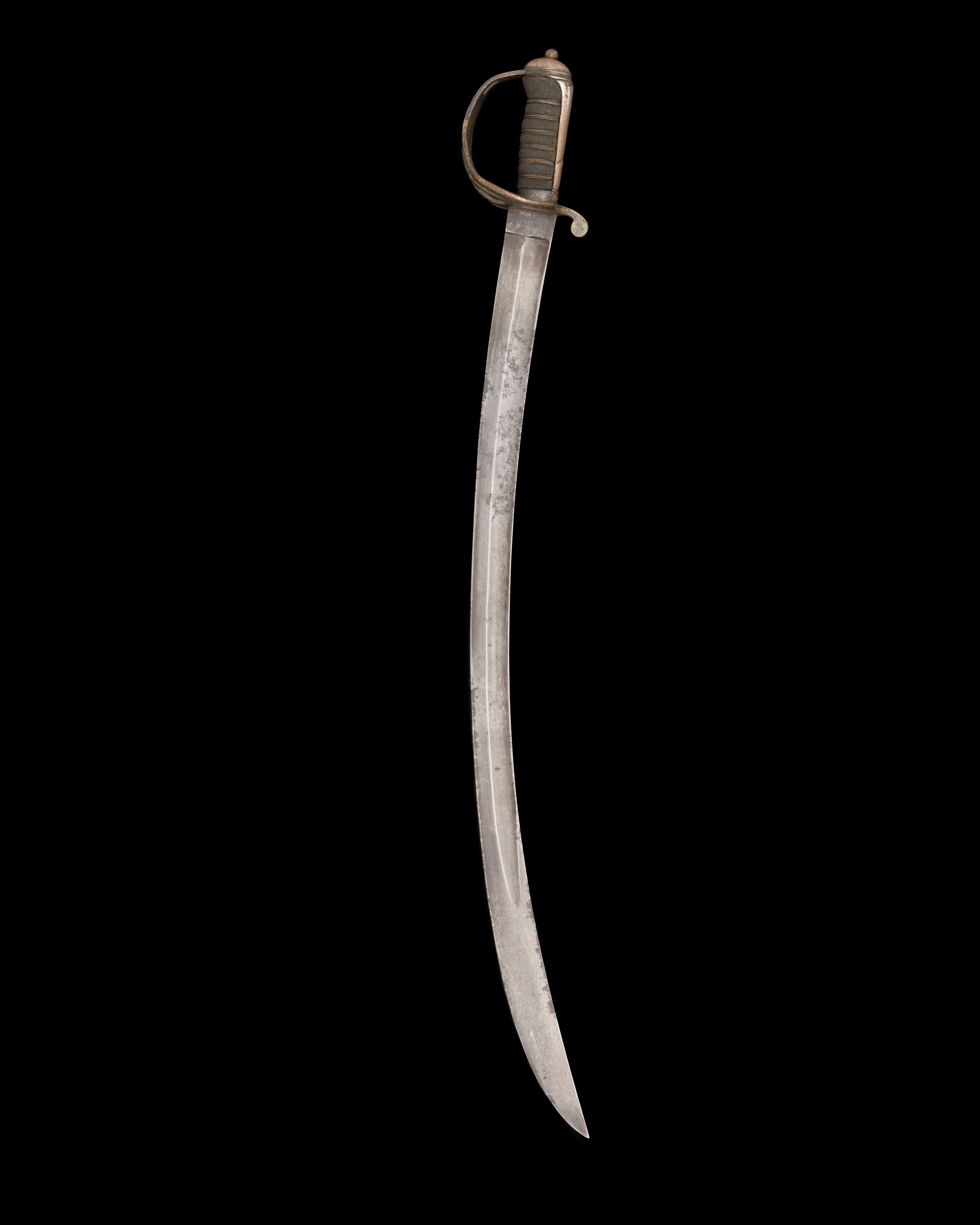
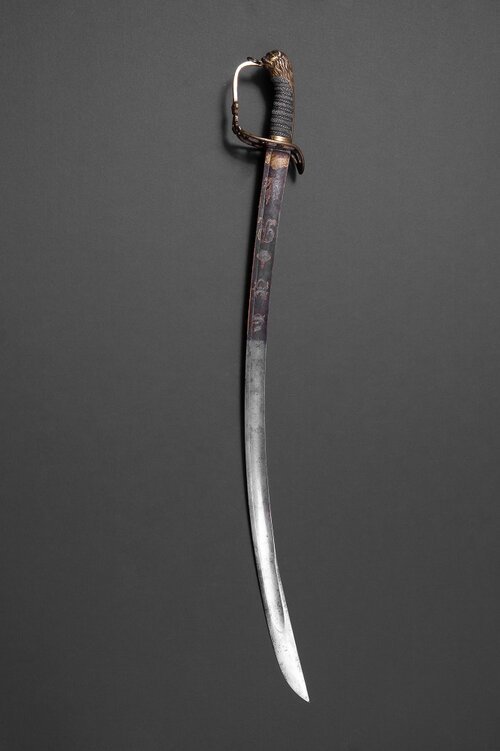
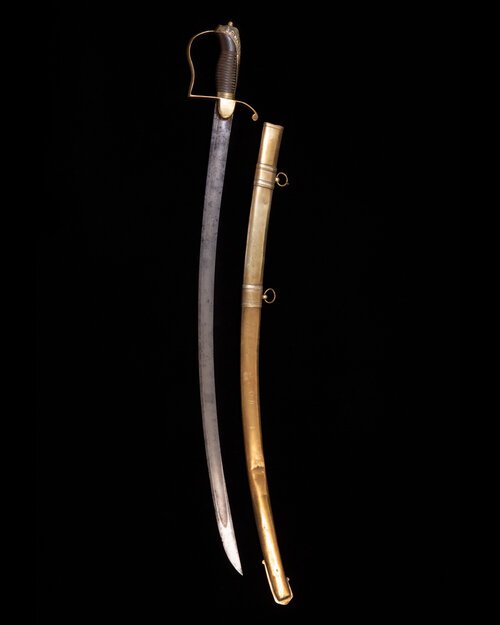
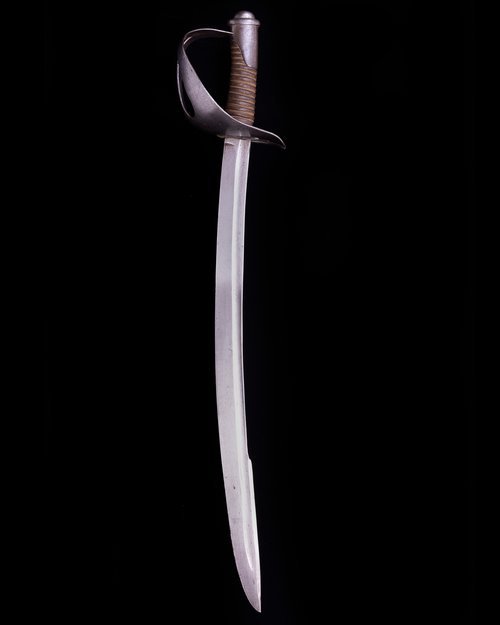
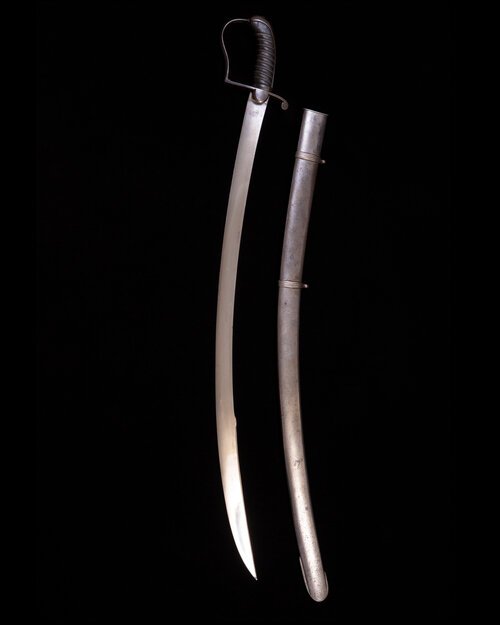
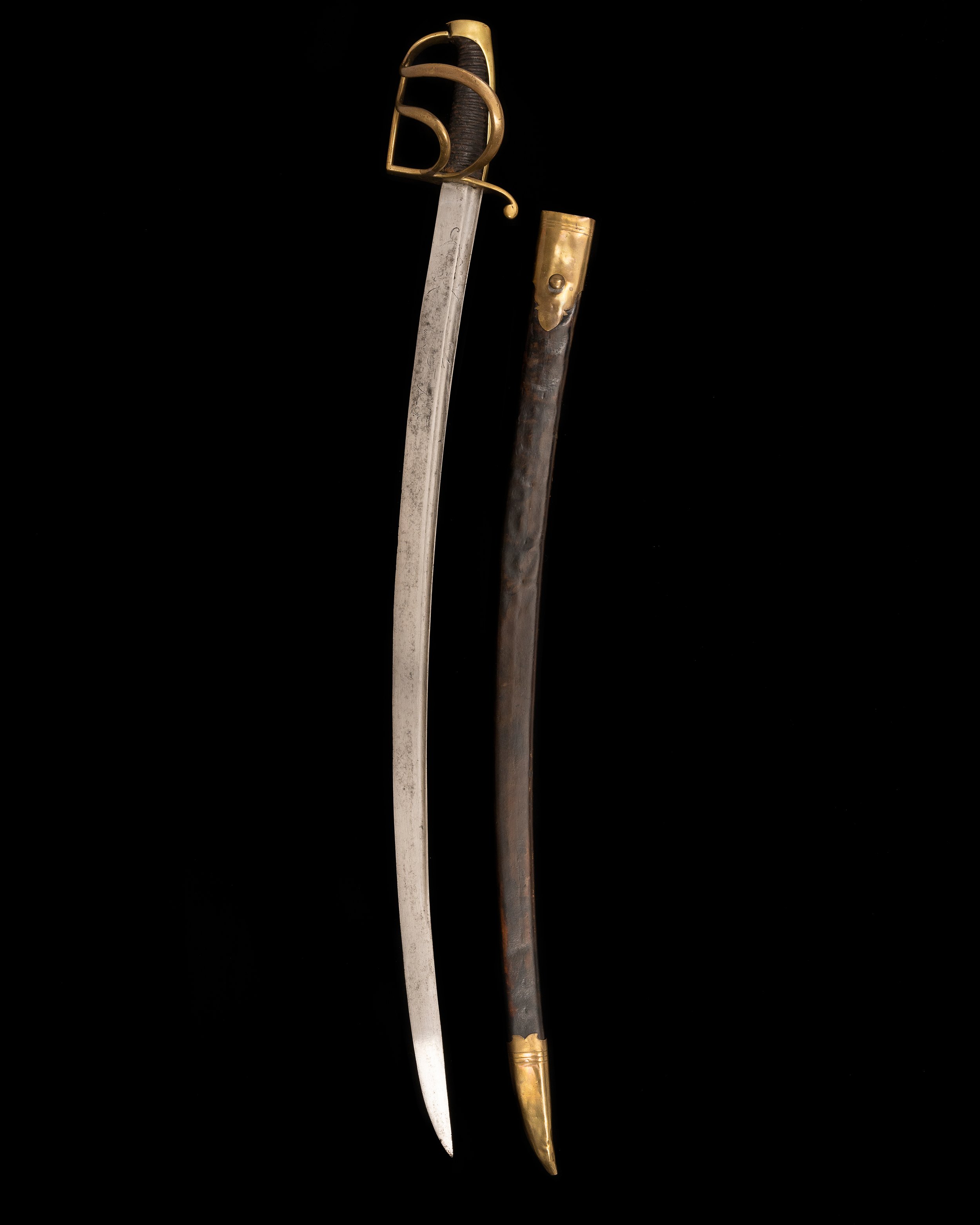
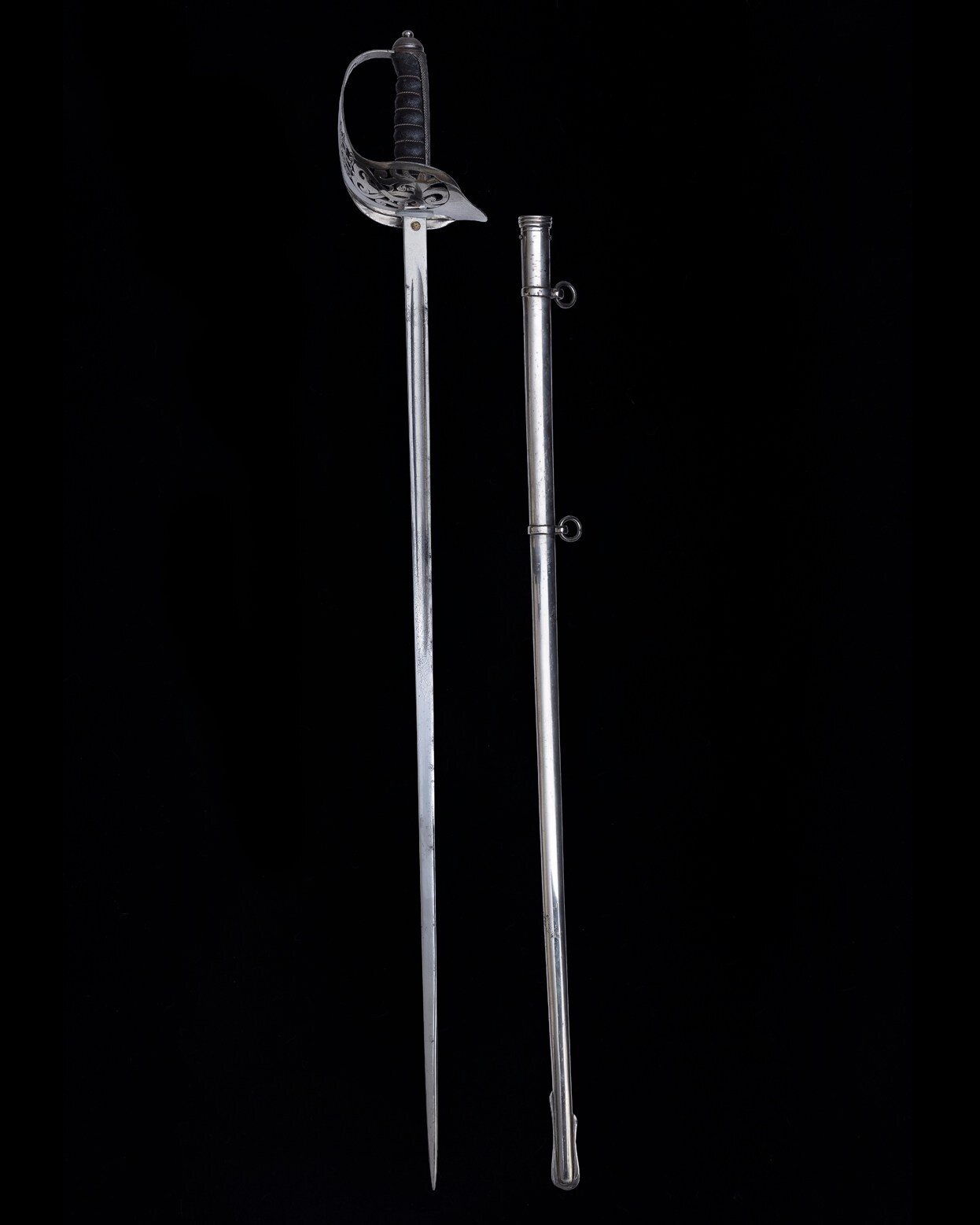
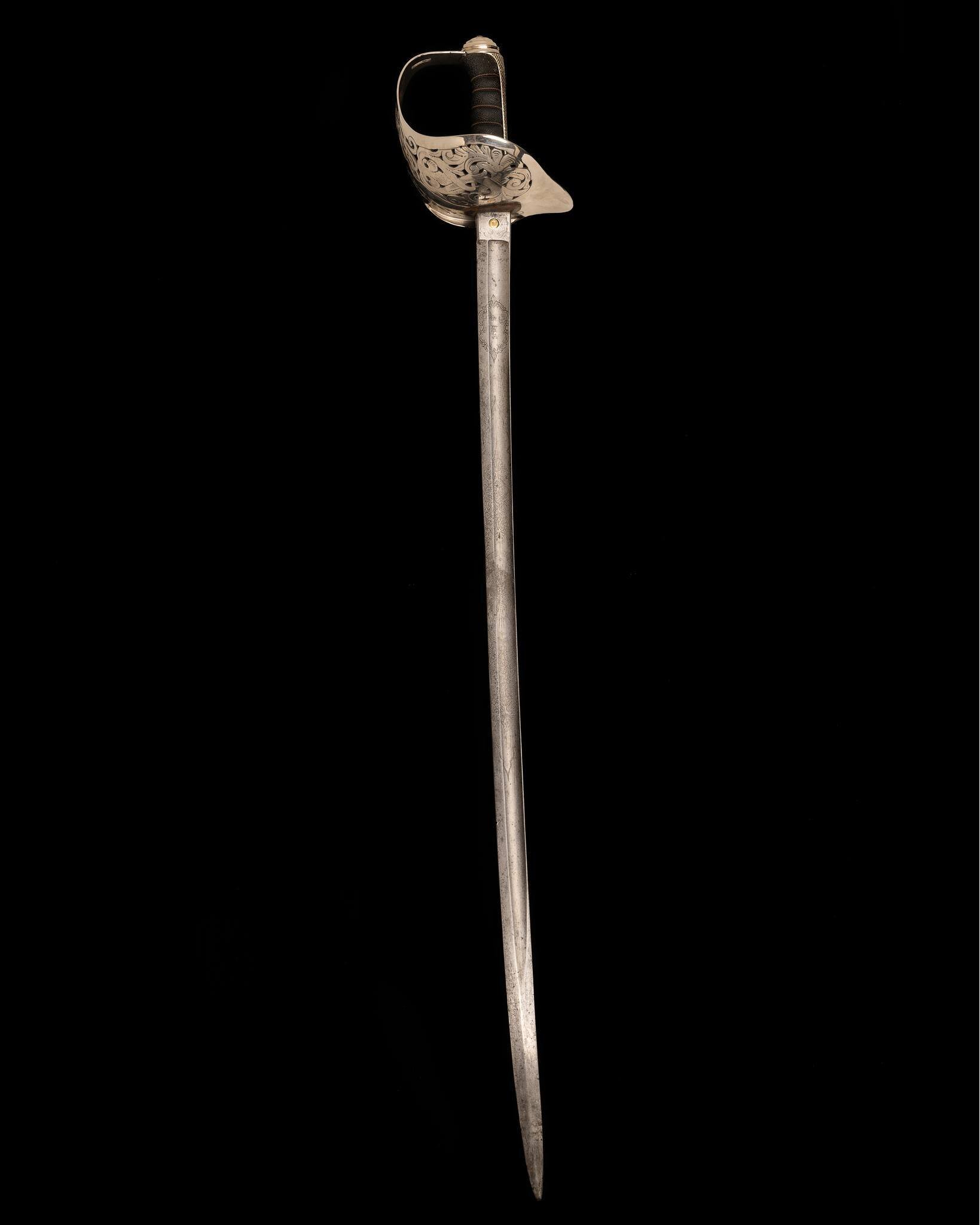
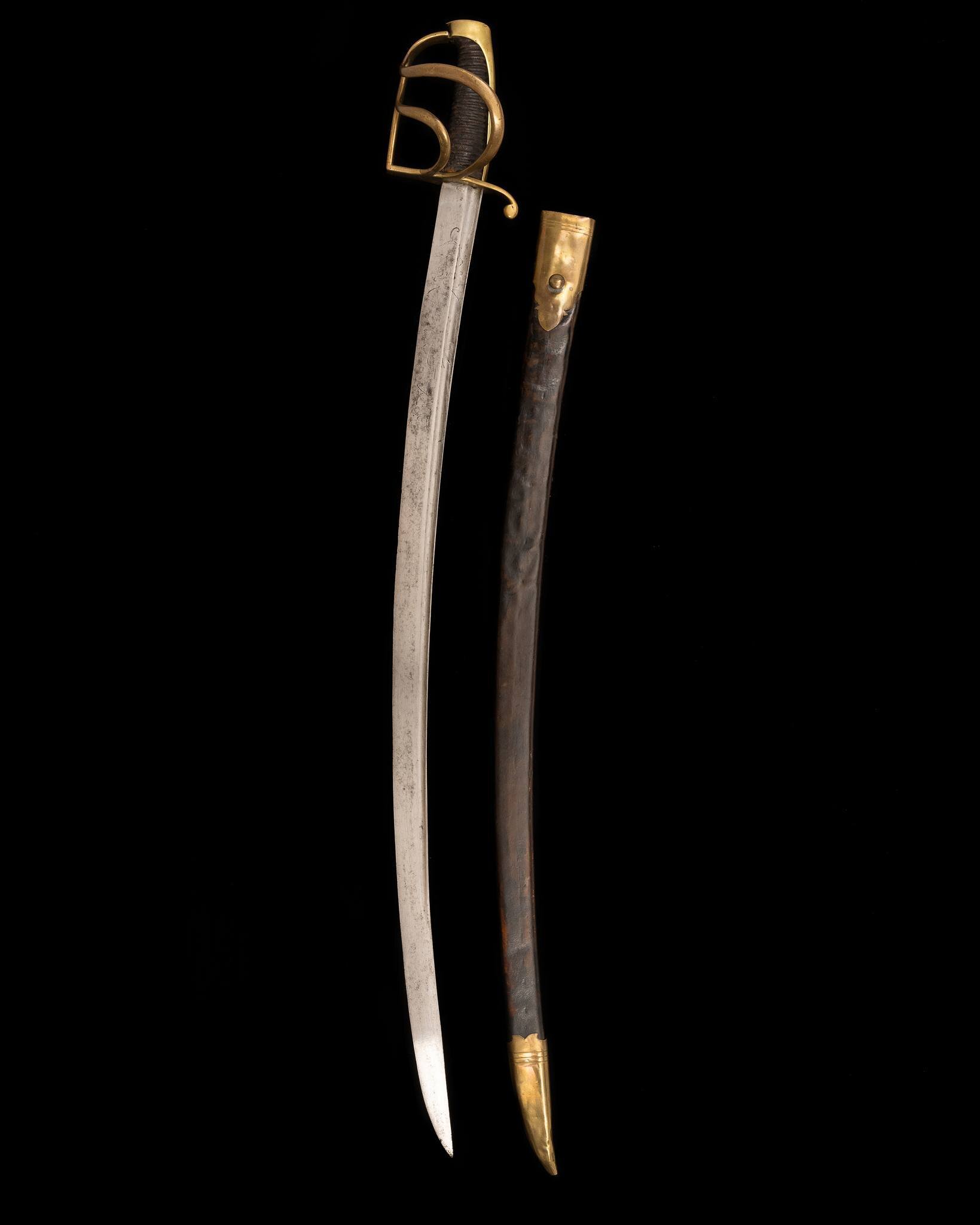
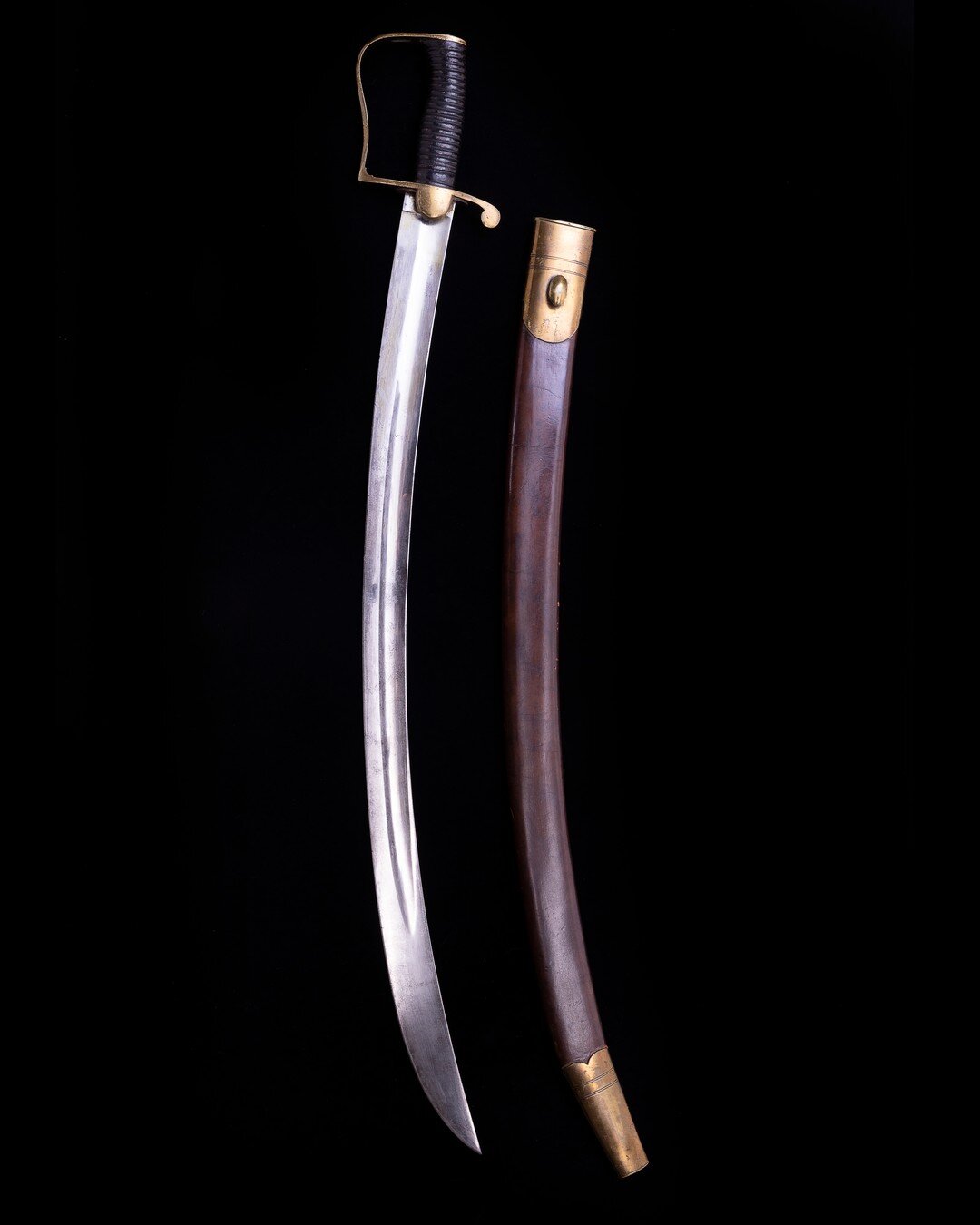
A good example of the type of 'paget'-bladed cavalry sword being used by most Indian Army cavalry between c.1875 and 1918. Consisting of a 1821-style, steel three bar guard a wide 32 inch blade and wire wrapped shagreen handle. The forte has numerous inspectors markings for Wilkinson and London Enfield and several Acceptance or reissue markings suggesting a very active service history
The blade has some areas of pitting and discolouration and could benefit from a gentle restoration, but is otherwise solid with no movement in the guard. The shagreen has lifted from the bottom of the handle. The blade shows evidence that it has been well service sharpened during its life
Introduced in around the 1870s, marrying a 1796 sabre type blade, called the 'Paget blade', to an 1821 pattern 3-bar hilt. Most were manufactured in Britain and exported to India. They were still being used in WW1 and were not replaced with the British 1908 pattern thrusting sword for all Indian cavalry until after the Great War.
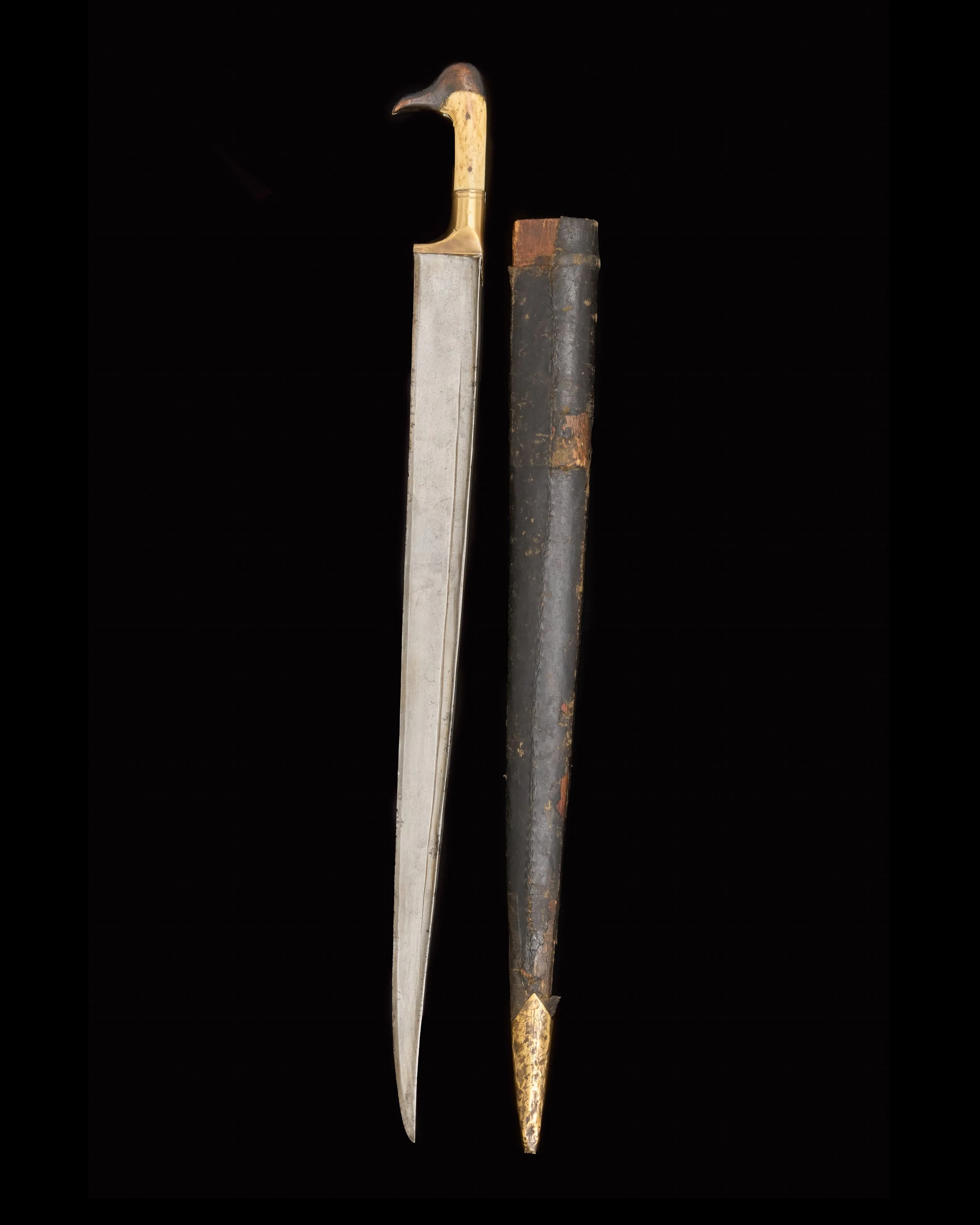
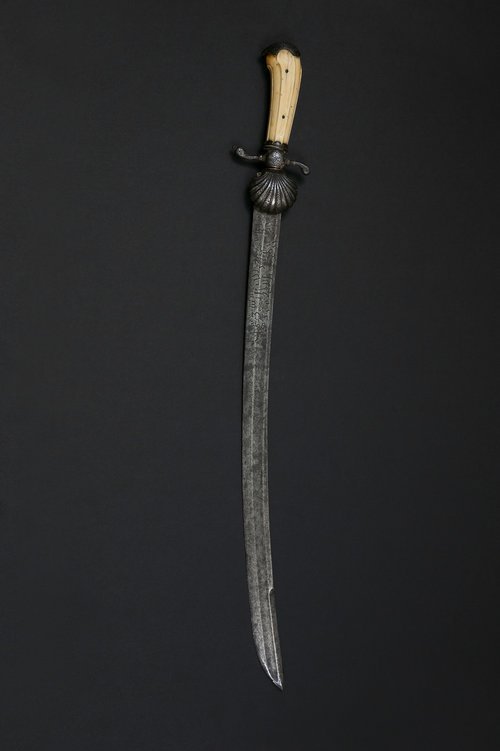
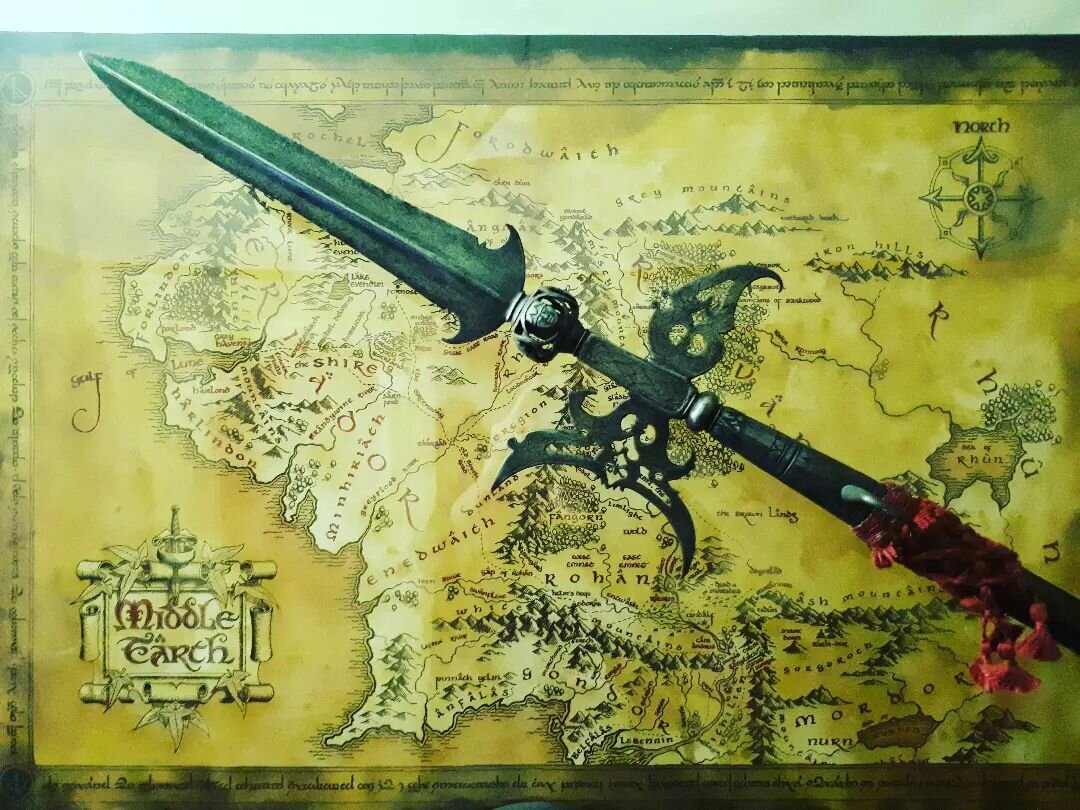
A large 19th centaury Khyber knife from Afghanistan. With a wootz blade, two piece bone grip, ebony pommel, wood and leather scabbard, 65cm blade 79cm overall. The blade does have some damage to the edge towards the tip, but is otherwise in good condition with no movement or looseness. The scabbard is worn with some loss to the leather but otherwise secure.
Originally these knives were named for the famous pass connecting Afghanistan and North India. They gained this common name from the British Soldiers who encountered it during the 18th and 19th century. Their common habit of referring to any blade that fit that particular style as 'Khyber Knives' christened it as such. However, the general area of manufacture for these weapons centred on the northern town of Bhera, which is now part of Pakistan.
Antique Firearms
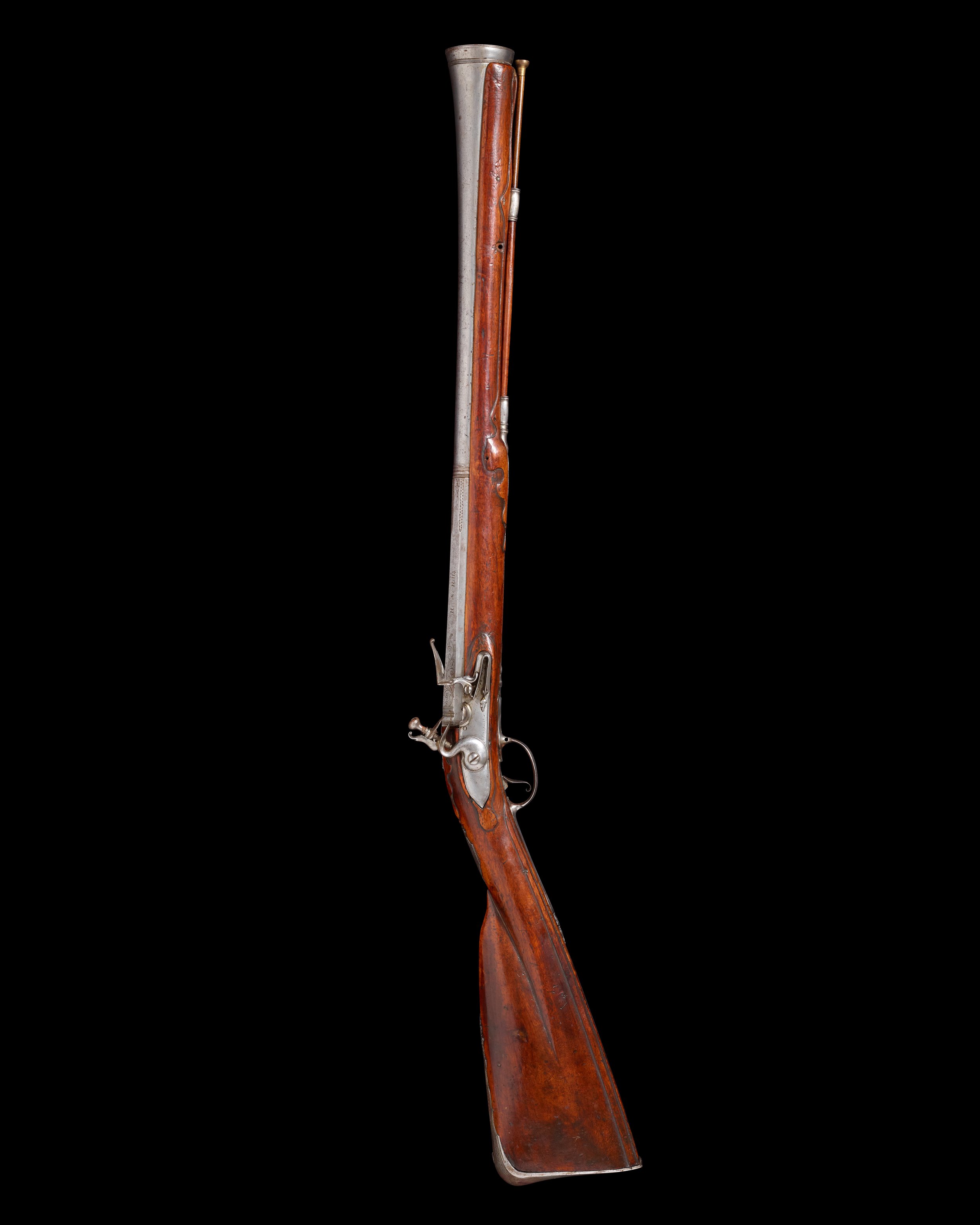
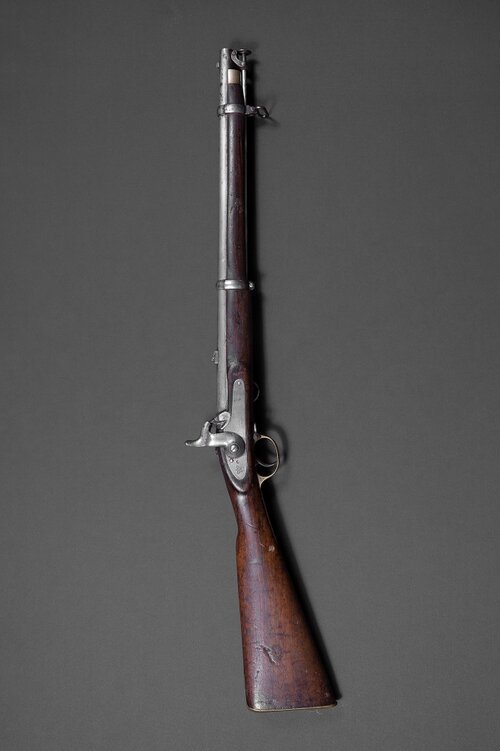
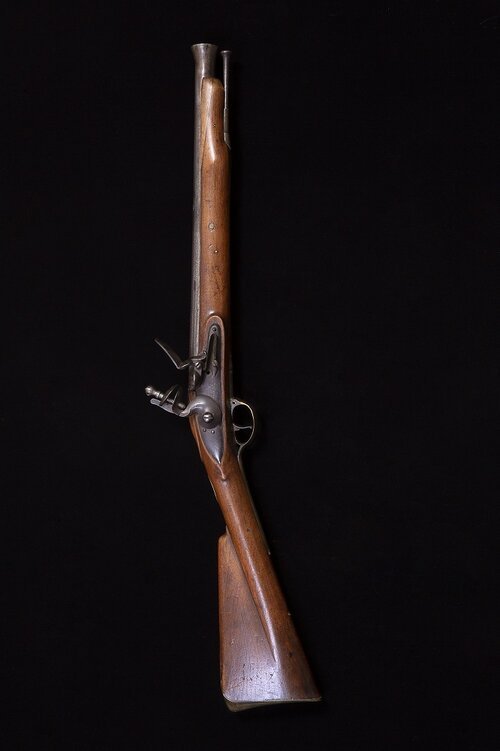
A large mid-18th century firearm with a three-stage steel barrel strongly belled towards the muzzle. Engraved at the median and over the breech, with sprays of foliage and a band of beadwork. Engraved steel mounts including solid-side-plate, butt-plate and trigger-guards, with a signed rounded lock. The breech is inscribed ‘H: S: N: 114’. Figured walnut full stock moulded over the fore-end, and about the tang.
The firearm measures 57cm in the barrel, and 95cm overall, and the barrel measures 6cm across at the mouth. Both half, and full cock are solid and hold well and the trigger is crisp
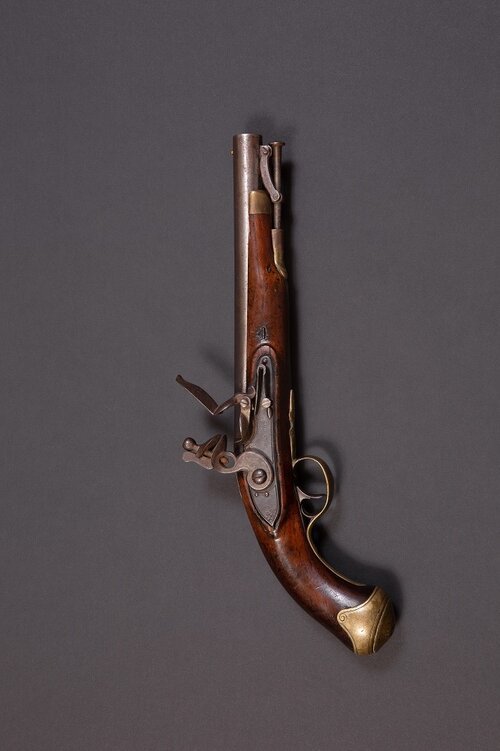
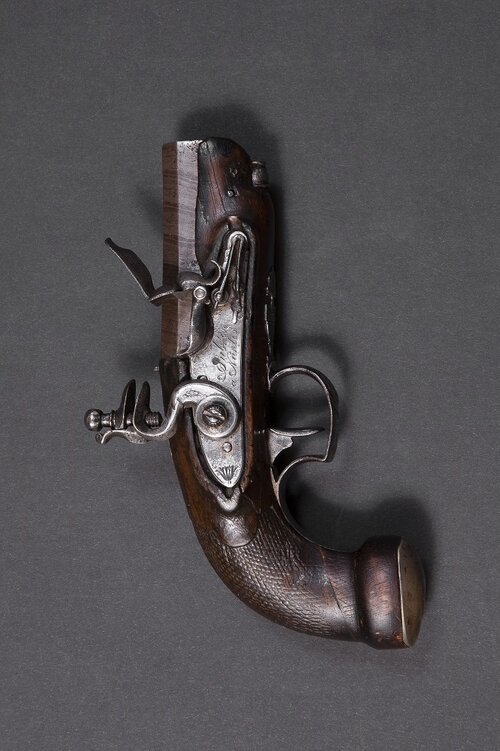
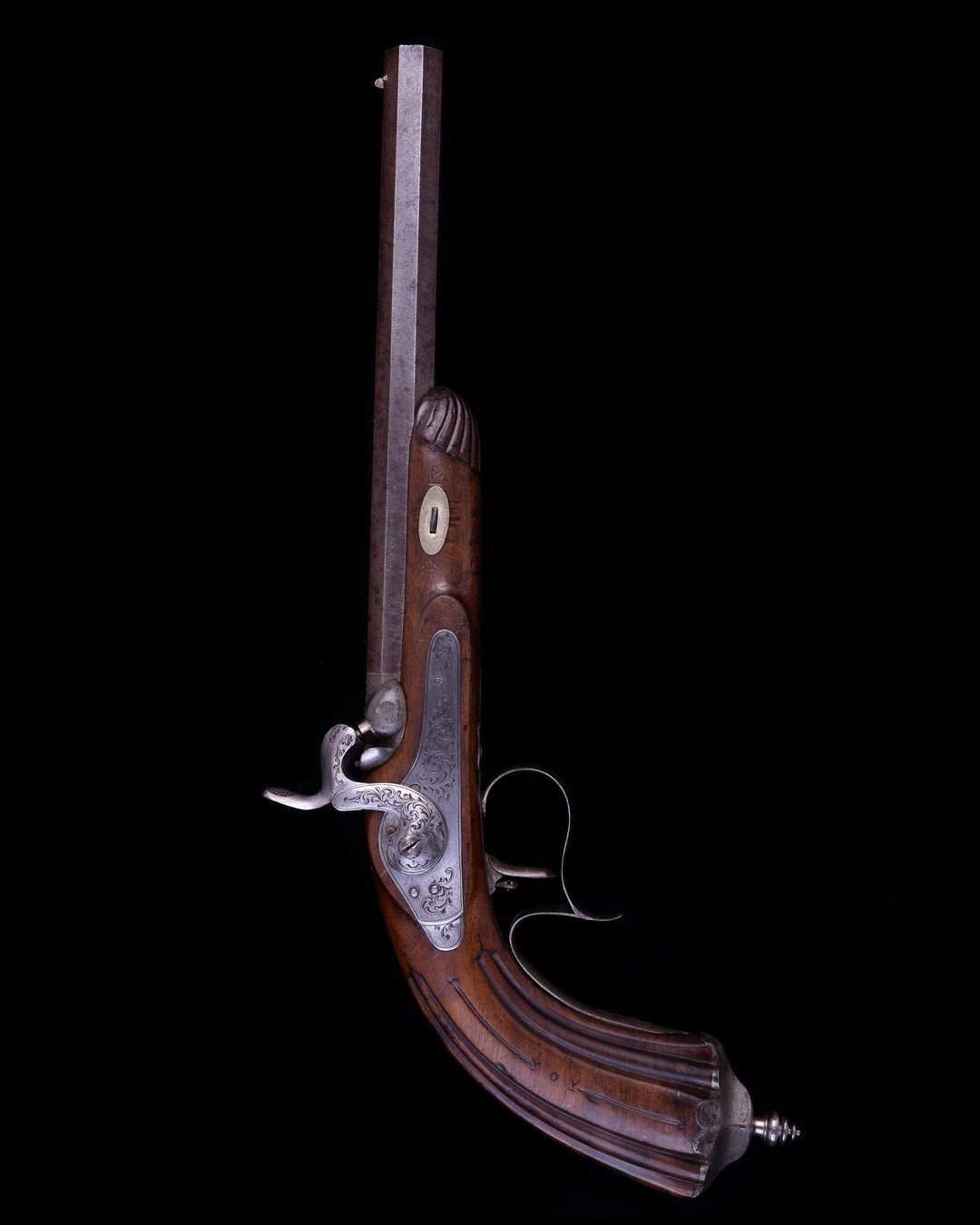
A French First Empire, converted percussion pistol. Finely made model for an officer, stamped with Augustin Merley-Dusmaret (St Etienne) & Jean Leclerc (famous gunner in Paris) allowing this weapon to be dated to the period 1809 to 1811. It was converted from flintlock to a percussion system around 1830, and is 17 mm caliber at the mouth
Fully functioning mechanism that holds well at both full and half cock with a good, crisp action.
Solid, heavy octagonal barrel with iron furniture. Comes with original ram rod with brass head and steel screw
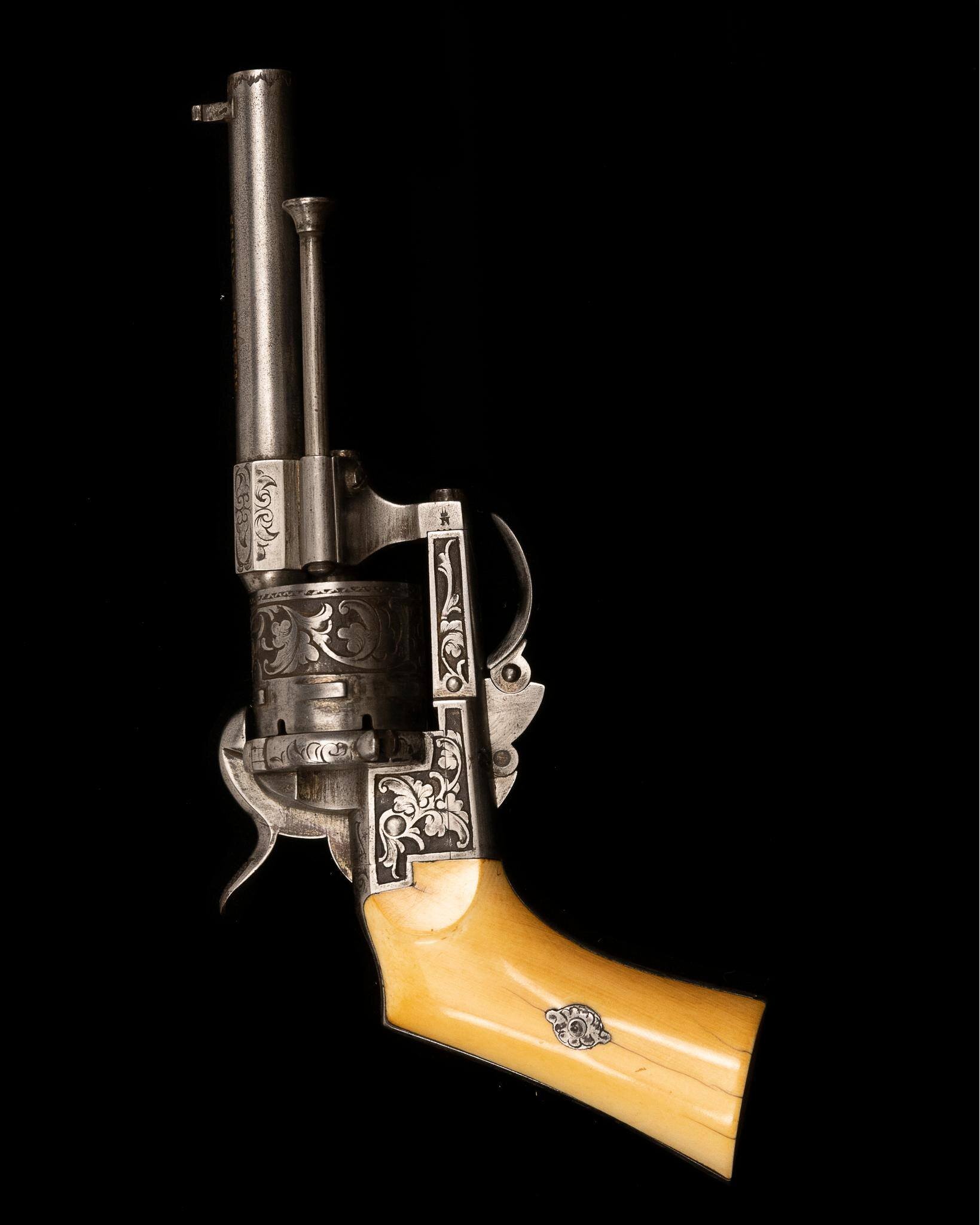
A good example of the 3rd Model Tranter Double Action percussion pistol. Solid frame, double trigger 54 bore revolver with 15cm (6") barrel, five-shot cylinder bearing London proof marks, hinged loading arm screwed to frame with unclear serial number to right frame and marked 'TRANTER' to cocking trigger; foliate engraved frame and chequered wood grip. Clean chambers and barrel with 5 lands and grooves
The third evolution of this popular revolver, this model had a more streamlined frame and the rammer was secured to the frame with a screw.
The double trigger Tranter was a popular model carried by British officers in Crimea, as well as with Confederate officers in the American Civil War. Allan Pinkerton, the Scottish born founder of the most famous detective agency in America carried two Tranters and is said to have armed his men with Tranter double trigger revolvers
Provenance:
Acquired from Michael J Noble Ltd, 2015.
The Kusmirek Collection, UK.
Knives & Bayonets
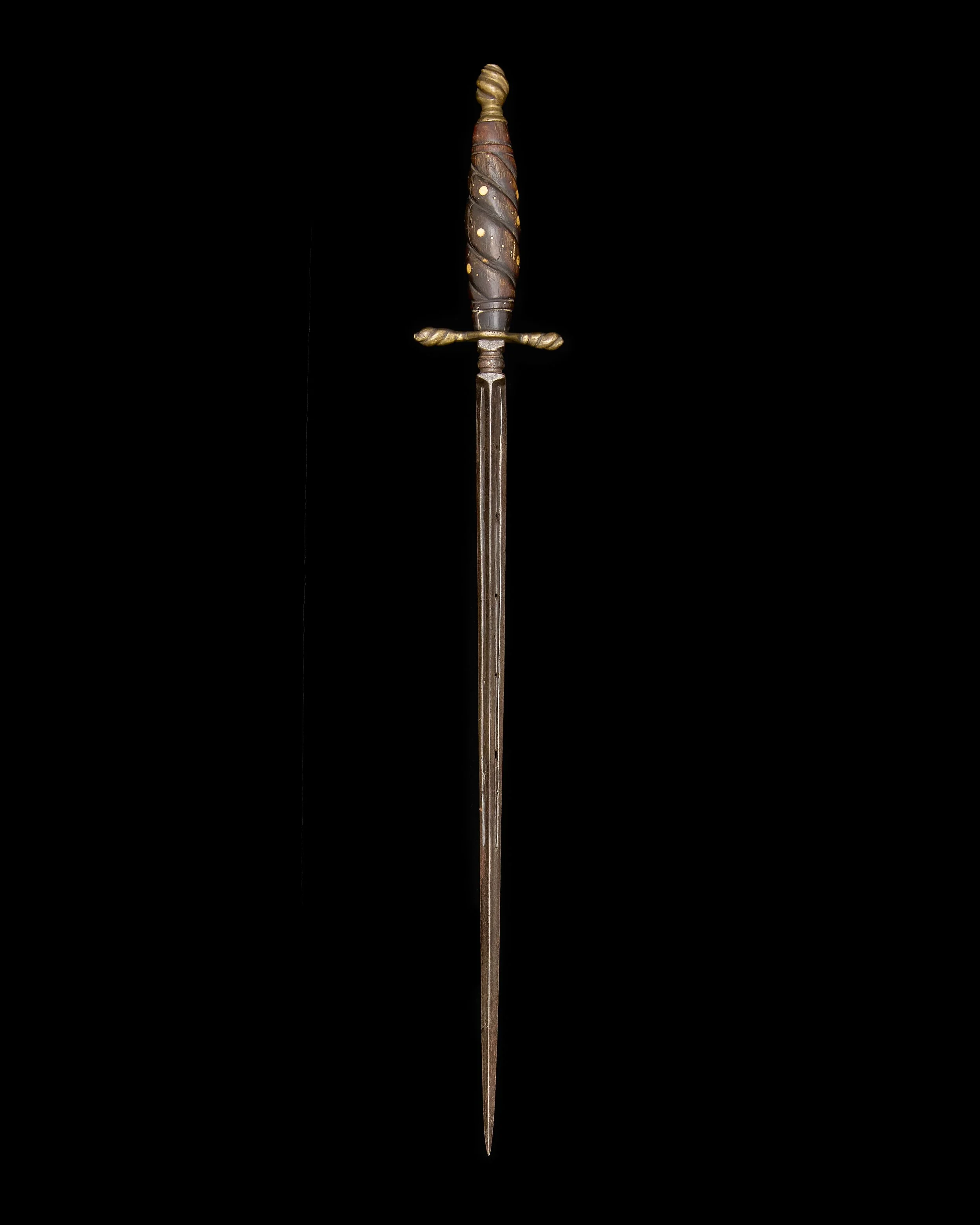
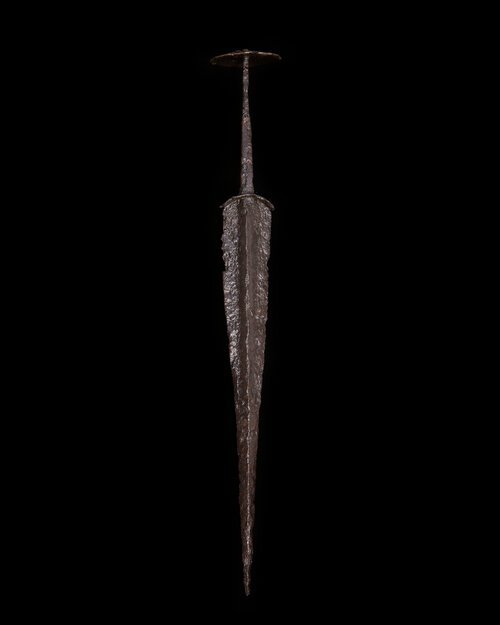
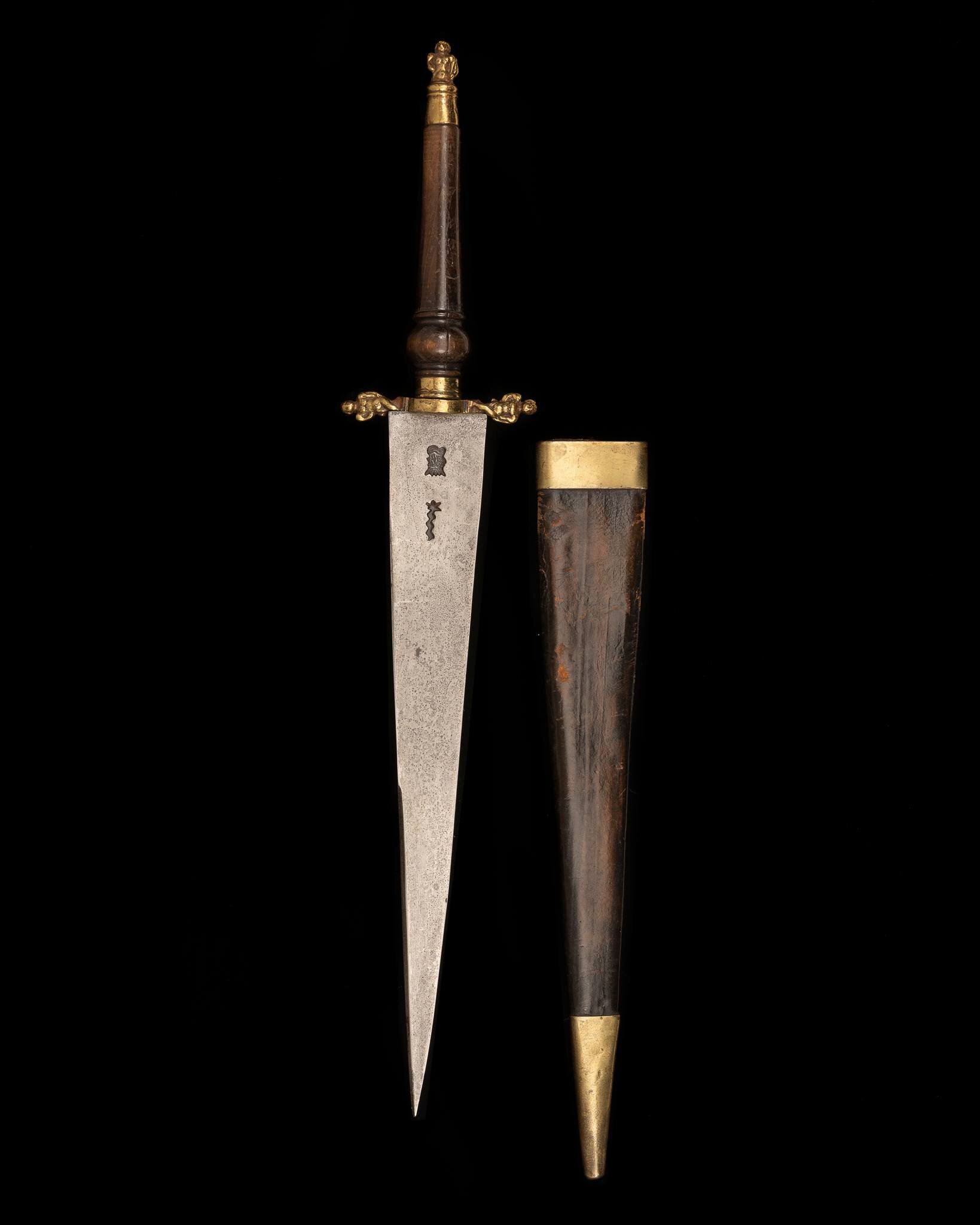
A massive stiletto dating to the 17th century. The tapering blade of triangular section forged with deep fullers and distinctive pierced decorative holes, with molded baluster-shaped forte. A pleasing overall greyish patina, with no rust or pitting. Attractive swirling dark hardwood grip embellished with small bone rondels and brass pins, crowned by a spirally-molded pommel and fitted with matching brass quillons.
Full Length 56cm Blade Length 40
First developed in Italy, the stiletto dates from the late 15th century, and is thought to be a development of the rondel dagger or misericordia, a needle-pointed weapon with a narrow blade designed primarily for thrusting, though possessing cutting edges. Early stilettos normally used a one-piece cast-metal handle which was shaped and turned on a lathe. The stiletto blade was usually hammer-forged into a dense rod with a narrow, triangular cross section, without any sharpened edges. However, other examples of the period have emerged bearing round, square, or diamond cross sections.
A left handed, or parrying dagger circa 1610
Iron hilt comprising strongly arched flat quillons with spatulate 'fish-tail' ends, offset from the blade at a slight angle . 3 central fullers with decorative flourishes. A large side-ring protecting the hand and arm. Chiseled button pommel with intact peen. Similar to other examples from Saxony held in the Royal Armouries
The blade is 30cm long, 4.5cm at the widest point, and 40cm overall. Age related staining and some pitting towards the tip, but otherwise in good condition
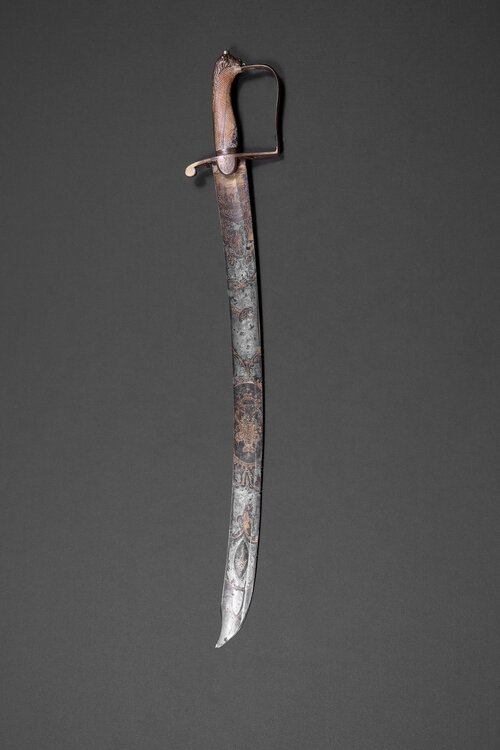
A large bowie style machete, circa 1866 - with curved steel blade measuring 33cm and 6cm at its widest point. The knife is 47cm long overall. The two piece wood grip mounted with brass plaques, one inscribed D. Robertson 1/12/ - 1866: D. Robertson was a Scottish Missionary to Africa
Solid blade with no movement in the handle. Some age related staining and minor pitting hear the handle
Books and Prints
By Authority, W. Clowes, Oct. 1st., 1816
A highly attractive instructional single-sheet poster showing Henry Charles Angelo’s Infantry Sword Exercise. Along the top are a series of figures showing the "Preparatory Movements" or postures, above a large circular "target" with the directions of the seven cuts and guards together with the words of command for the Infantry Sword Exercise. The figures are by John Augustus Atkinson who was noted for his "spirited and lifelike" figure-drawing; Here he shows a range of contemporary infantry uniforms including the Rifle Brigade and a Highlander.
Framed in stained wooden frame with acid free paper and museum grade UltraVueUV99 glass(uv protection, non-reflective) by Clapham Picture Framers. Minor damage to the poster along some of the fold lines
The poster is dedicated “To Field Marshal His Royal Highness, The Duke of York. by Henry Angelo Junr
Angelo's Fencing Academy was established in 1759 by Domenico Angelo Malevolti Tremamondo r. Angelo, as he became known, set up a highly fashionable “école d'escrime” in Soho which enjoyed the patronage of the Prince of Wales and the Duke of Devonshire. Angelo's eldest son Henry, who had put the final polish on his fencing skills studying in Paris under Motet, became virtual head of his father's académie around 1785 and continued its reputation as “not only a school-of-arms, [but as] a school of deportment as well” [Aylward, The House of Angelo, p. 38.] In turn Henry's son, also named Henry, inherited the business when his father “retired from their active conduct of the school” in 1817. Henry Charles Angelo (Younger) had begun to teach the military even before taking over his father’s fencing school, and during the Napoleonic Wars. Around the year 1813, he began to teach the Royal Navy a form of cutlass exercise. These works were described as a combination of Scottish and Hungarian methods By 1815, and perhaps sooner, Henry Charles Angelo was teaching an infantry sword exercise to troops serving in France. Finally in 1817, his system was officially accepted as the new standard for the British army, and is the work you see in this document, and in 1833 he was appointed Superintendent of Sword Exercise in the Army.
This was the first ever officially adopted infantry sword exercise for the regular British army. It was re-printed and updated a number of times, and served as the standard and official manual of infantry sword exercise until nearly the end of the 19th century, when a new form of sword and swordsmanship was introduced
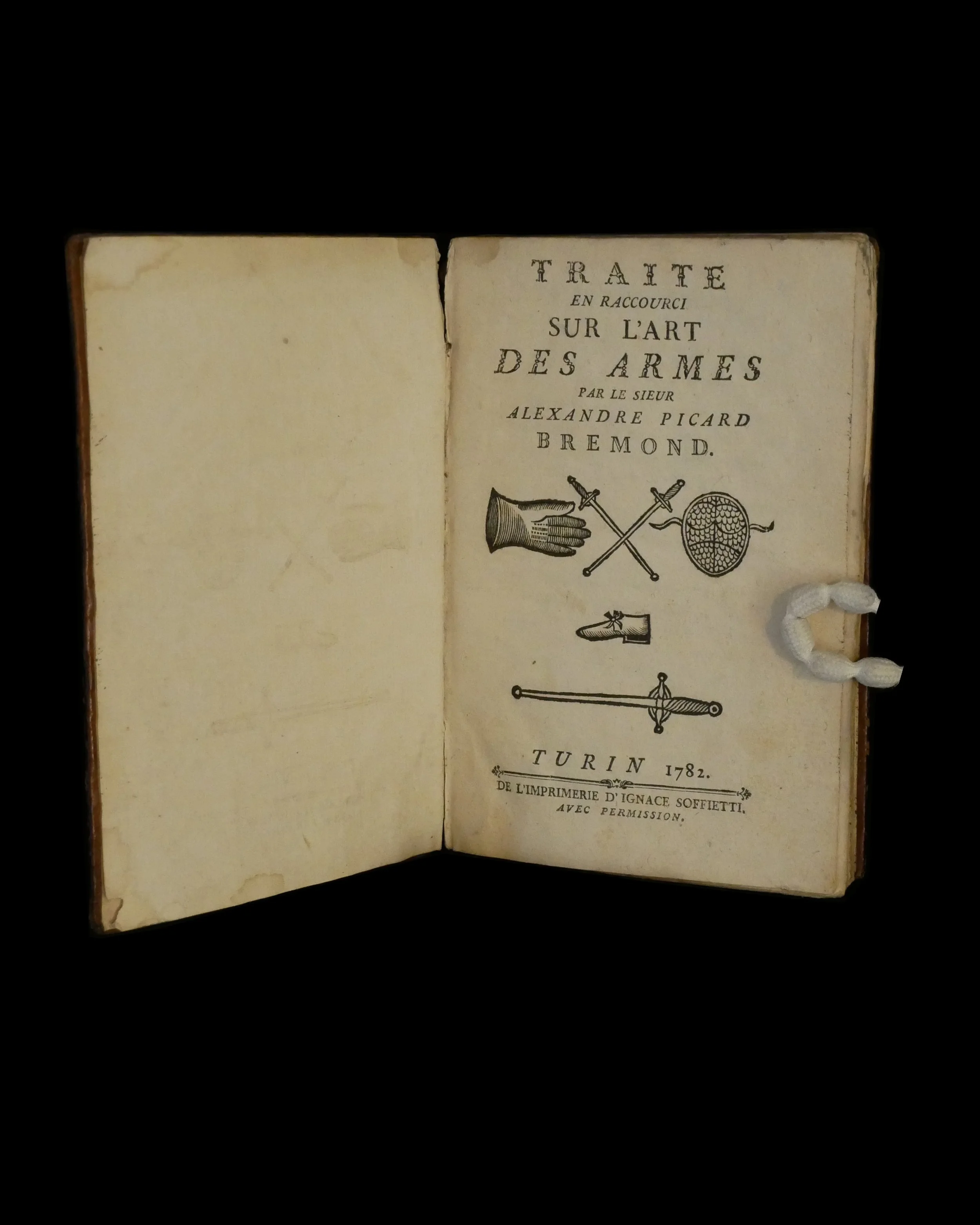
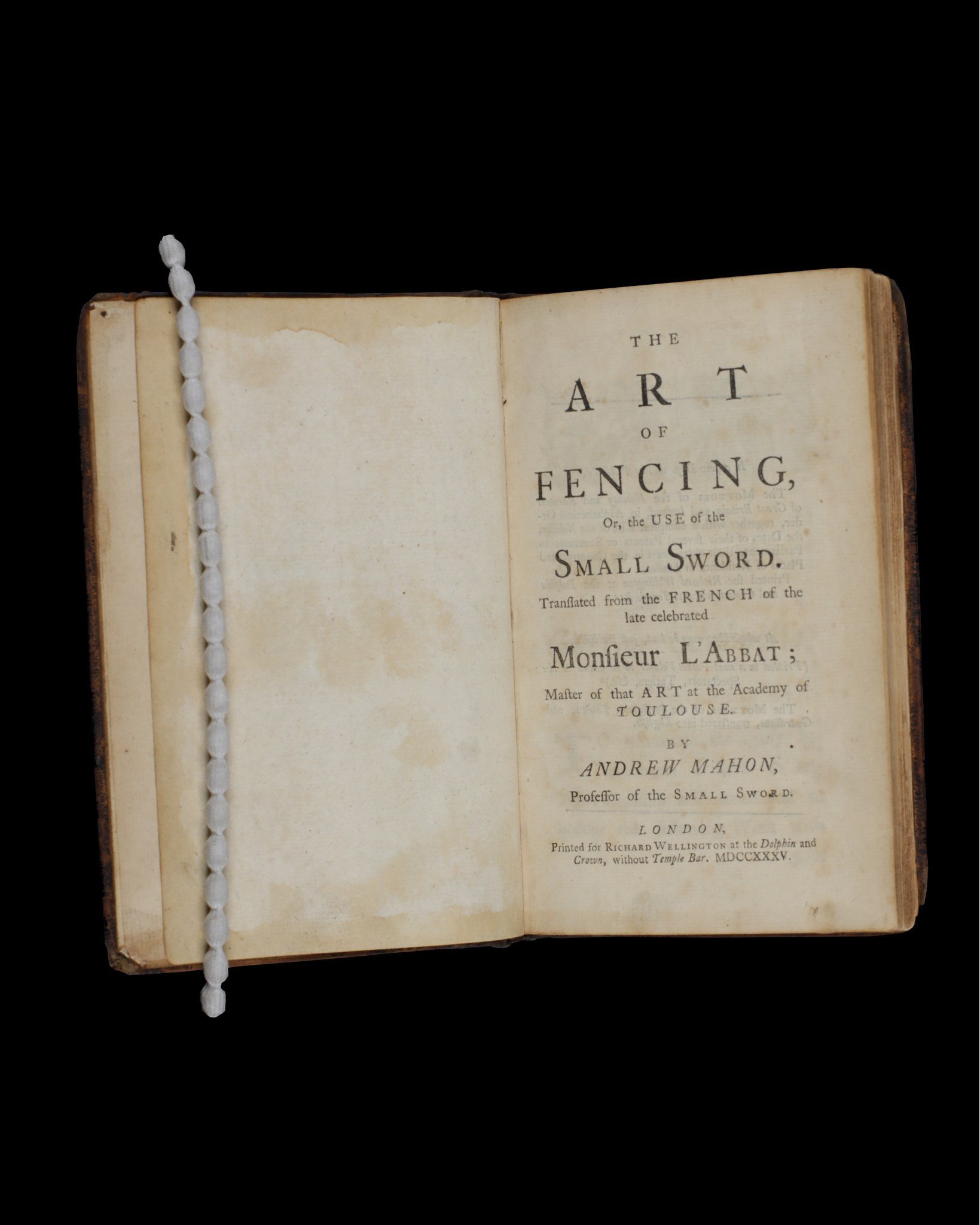
Alexandre Picard Bremond served as a fencing master for the troops of Charles de Rohan-Soubise, Prince of Soubise (1715-1787) Marshal of France and Minister of State. He notably participated in the Seven Years' War. Later Brémond served in the premiere Compagnie of the Musketeers of the military household of the King of France (Musketeers of the Guard) until they were disbanded in 1775.
Brémond seems to have traveled extensively within a European. He writes in Naples and publishes in Turin, mentions an assault he led at Spa, and then cites the best European marksmen and fencing masters. The most famous is undoubtedly the Chevalier de Saint-Georges, considered to be the greatest marksman of his time.
The manual come across as remarkably modern; it is the first treatise to mention and recommend the use of a fencing mask. In terms of terminology, it may also be among the first to discuss one-two and one-two-three, still used in modern Olympic fencing.
8vo (140x100 mm); contemporary calf; pp. 56; binding with some defects, inside very small and light stains, else a genuine copy. The title-page is illustrated by five woodcuts depicting a sword, a lovely fencing shoe, a glove, two crossed swords and finally one of the first know depiction of a wire fencing mask with ties
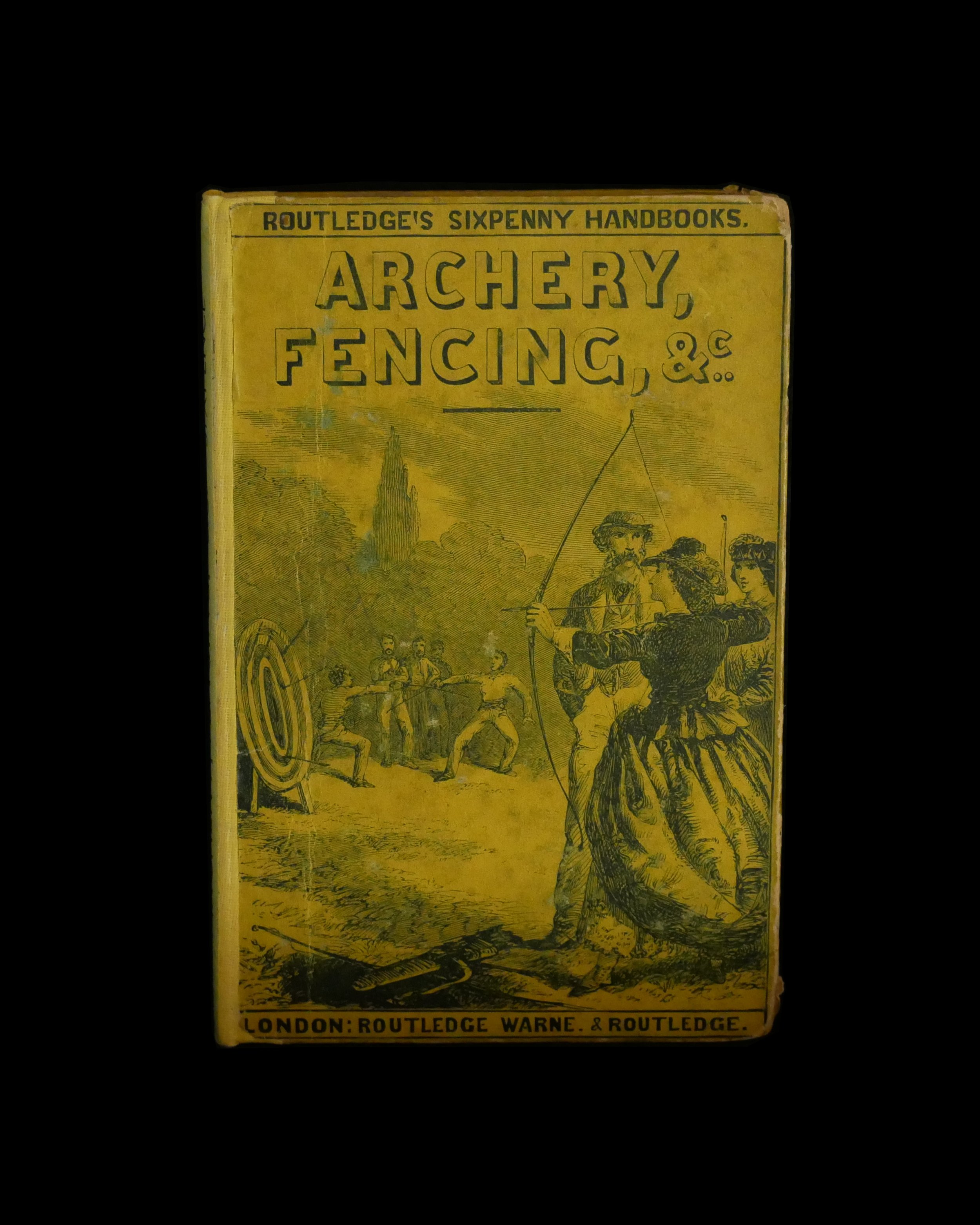
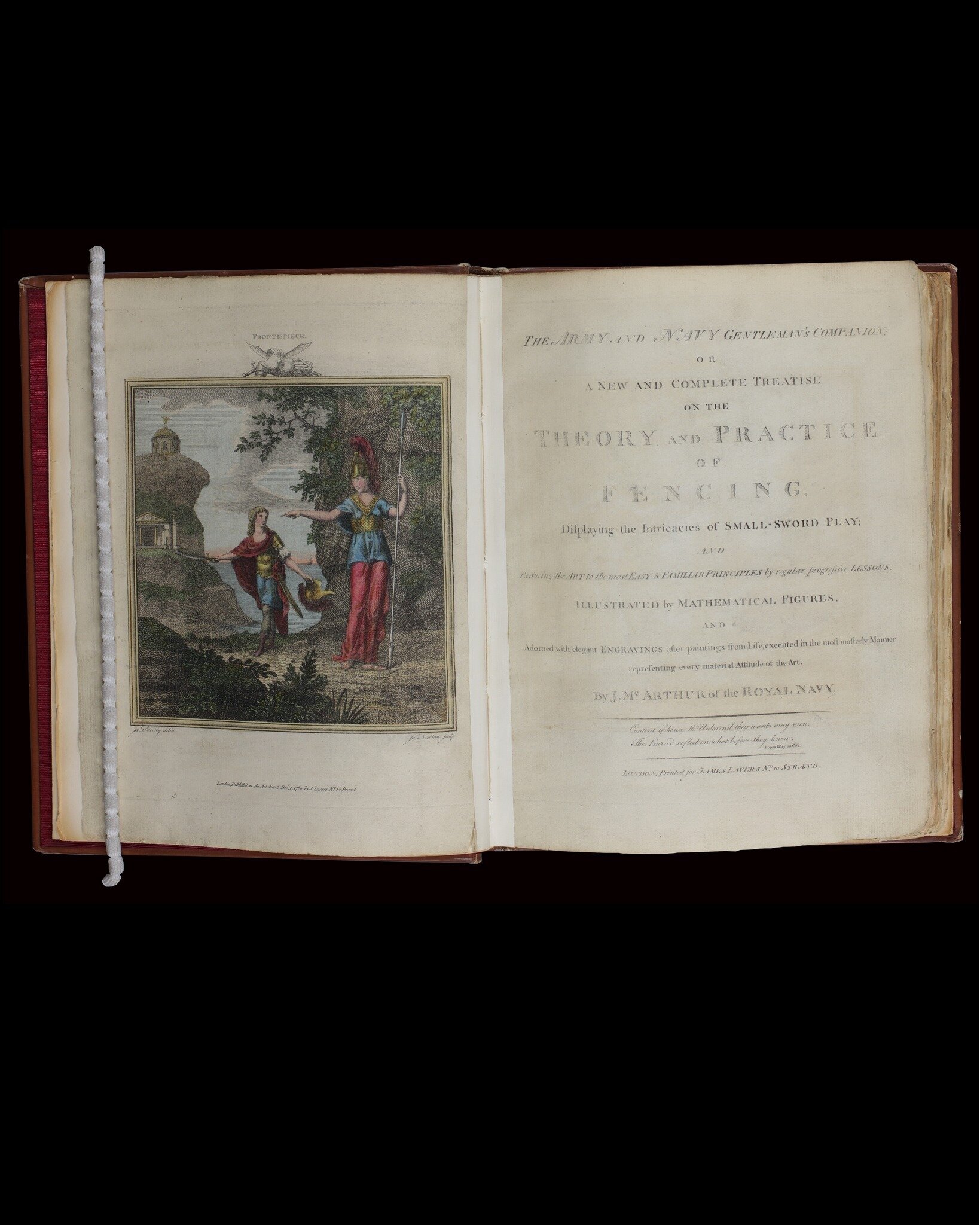
Writing in 1863 John Henry "Stonehenge" Walsh and Rev. J. G. Wood published their manual apparently intended for the "historic combat sports" market, in vogue with the middle class of the time.
Despite the blatant plagiarism, most notably, plagiarizing significant amounts from John Gaspard le Marchant who wrote his popular military and Broadsword manual 67 years prior, they compiled a fairly comprehensive yet concise little manual covering Archer, Fencing with the Foil, and Broadsword.
The Archery section contains basics of equipment, usage, and uniform as well as itemizing several type of competition, and even detailing the basics of an Archery Club.
The Fencing section includes the basics of the use of the Foil, positions, terminology, engagements, and general advice.
The Broadsword section incorporates details on the training and usage of the Broadsword, in a Military Saber configuration, training, set drills, and suggestions for "loose play."

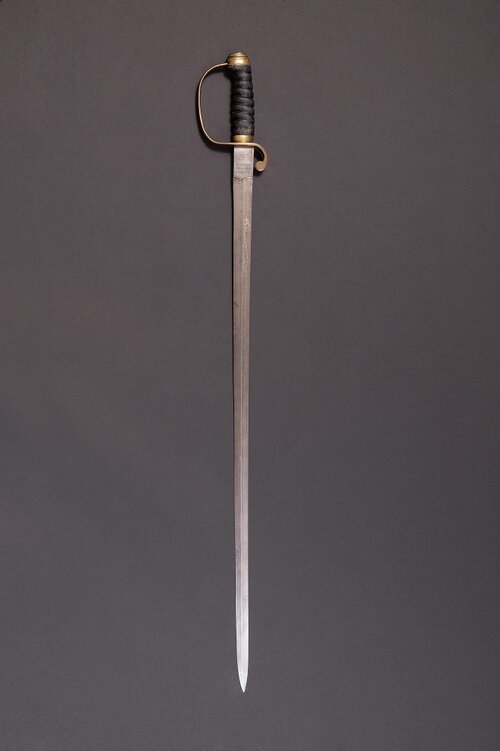
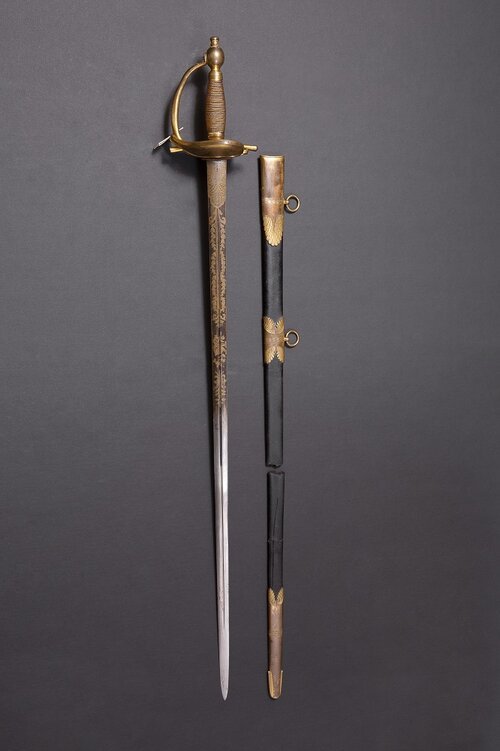
A silver-hilted British Shearing sword, London 1761. With a tapering double-edged blade, silver hilt cast and chased with writhen designs, comprising boat-shell guard, a pair of quillons with scalloped terminals, knuckle-guard struck with marks (rubbed), and spirally-moulded ovoid pommel, and the grip bound with plaited copper alloy wire and ribband between silver collars, 74.7 cm blade
The handle is marked for William Kinman, (a raised 'WK' within a shaped cartouche). He was a prominent London silver hilt maker and leading member of the Founders Company of which he was elected Master in 1780
The shearing sword was popularised by fencing masters William Hope and Donald Mcbane as a cut and thrust blade, but with out the weight commonly found in the backsword. Only around for a short period, the however had a long service life, before eventually being replaced by the single edged spadroon